ASP in the Loop: From Structured Prompting to Agentic Logic Programming
Speaker: Mario Alviano

- Affiliation: University of Calabria, Italy
- Website: alviano.net
Abstract
The integration of Large Language Models (LLMs) with Answer Set Programming (ASP) has moved beyond simple code generation. Today, the challenge lies in creating seamless, bidirectional workflows where symbolic reasoning provides the structure and verification for probabilistic models. These workflows are examined within ASP Chef, a modular environment where logic programs are developed and deployed as structured “recipes.” By providing the plumbing necessary to connect solvers with external AI models, ASP Chef enables a new class of applications where traditional ASP development and generative interactions coexist in a unified workspace.
The presentation will cover:
-
The LLMASP Pattern and Structured Interaction: Drawing on the ASVIN project in fashion retail, the LLMASP toolset enables a robust “Natural Language → Logic → Natural Language” pipeline. The use of Mustache templates as a bridge for data-driven prompting allows logic results to be injected directly into chat completions. This ensures that LLMs handle messy inputs while remaining grounded in the stable models provided by the solver, resulting in precise, tool-ready instructions that respect strict domain constraints.
-
The Sous Chef & Agentic Manipulation: Initially integrated as a context-aware chat assistant with direct access to the ASP Chef documentation and the current recipe, Sous Chef has evolved through the Model Context Protocol (MCP). This enables external AI agents (such as Gemini, Copilot, or Claude) to act as first-class participants in the development process. These agents do not merely “discuss” code; they utilize tools to actively manipulate the recipe, programmatically editing logic programs and managing ingredients within the environment.
-
Visualizing Logic: Extending the reach of ASP into generative media through ComfyUI interaction. We demonstrate how complex image-generation flows can be packed into templates, allowing ASP to control parameters and turn abstract answer sets into high-fidelity visual schematics or artistic renders.
Ultimately, this talk aims to demonstrate that one of the most compelling frontiers for ASP lies in its role as an interactive “bridge” providing the principled constraint management necessary to ensure the reliability and integrity of increasingly complex AI agent workflows.
Short Biography
Mario Alviano is a Full Professor at the University of Calabria, where he leads the LAIA Lab (Laboratorio di Applicazioni dell’Intelligenza Artificiale). He holds a Ph.D. from the same institution and is a prominent figure in the field of Answer Set Programming (ASP) and Declarative AI. His research focuses on formal logic, knowledge representation, and automated reasoning. Mario has been a visiting researcher at TU Wien and the University of Oxford, and has presented his work at flagship venues such as IJCAI, ECAI, and JELIA. With over 120 scientific publications in top-tier journals and conferences (including AIJ, JAIR, TPLP, AAAI, and KR), he is consistently recognized among the top 2% of most-cited scientists worldwide according to Elsevier’s standardized indicators. A recipient of the “Marco Somalvico” Award (2017) for the best young Italian researcher in AI, he has also received numerous Best Paper Awards at conferences including ICLP, LPNMR, RR and CILC. Currently, he co-leads the ASVIN project, focusing on the practical application of logic-based AI in industrial domains. Beyond AI research, he teaches Secure Software Design and Cyber Offense and Defence, where he works to integrate modern cybersecurity concepts and formal security principles into the development of ASP-based systems.
From CLP(R) to MiniZinc: There and Back Again
Speaker: Peter Stuckey
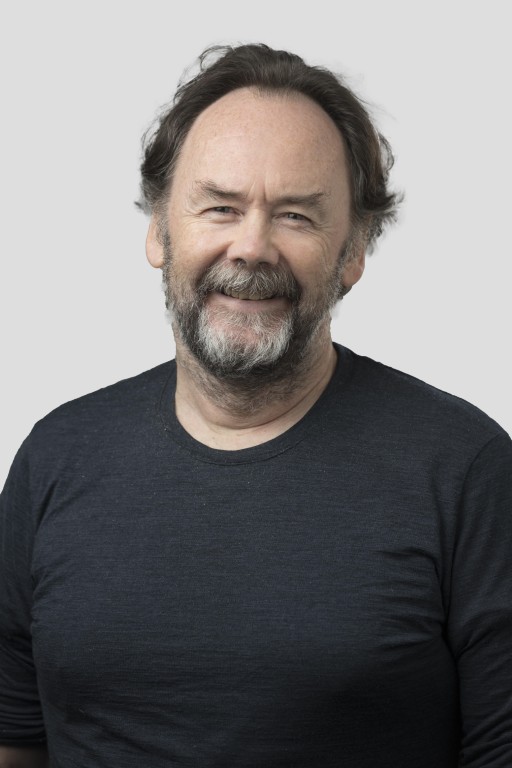
- Affiliation: Monash University, Australia
- Website: people.eng.unimelb.edu.au/pstuckey
Abstract
Constraint logic programming (CLP) was a revolution in declarative programming showing how we could answer very interesting and complex questions by a combination of programmed search and constraint solving. But constraint programming (CP) moved away from its logic programming roots to concentrate on modelling, simply specifying a system of constraints, in the process losing the ability to do complex meta-search. MiniZinc is one of the leading constraint programming modelling languages. It was originally designed to tackle complex CP problems, typically small systems of complex constraints. But its uses have changed, often it is used to solve very large systems of simple constraints. This meant that many of the original assumptions in the design of MiniZinc are invalid. In this talk we will examine a new architecture for MiniZinc, which uses constraint solving for model optimization, and includes incremental solving and backtracking. In some sense the new architecture makes MiniZinc a CLP system, bringing us back to the roots of the field.
Short Biography
Peter J. Stuckey is a Professor in the Department of Data Science and Artificial Intelligence in the Faculty of Information Technology at Monash University. He received a B.Sc and Ph.D both in Computer Science from Monash University in 1985 and 1988 respectively. Since then he has worked at IBM T.J. Watson Research Labs, the University of Melbourne and Monash University. In 2009 he was recognized as an ACM Distinguished Scientist. In 2010 he was awarded the Google Australia Eureka Prize for Innovation in Computer Science for his work on lazy clause generation. In 2019 he was elected as an AAAI Fellow. and awarded the Association of Constraint Programming Award for Research Excellence. Peter Stuckey is a pioneer in constraint programming and logic programming. His research interests include: discrete optimization; programming languages, in particular declarative programing languages; constraint solving algorithms; path finding; bioinformatics; and neuro-symbolic AI; all relying on his expertise in symbolic and constraint reasoning. He enjoys problem solving in any area, having influential publications in e.g. databases, election science, system security, and timetabling, and working with companies such as Oracle and Rio Tinto on problems that interest them.